


Student Blog

To Fieldwork, Thanks for Everything! ⟩
April 19, 2024
by Jaida
Fieldwork. It can be the best of times, it can be the worst of times. No two experiences are the same which can be both a blessing and a curse. A little bit before this time last year, I was starting…

Lessons I Did NOT Expect OT School to Teach Me ⟩
April 2, 2024
by Natalie
Hey everyone! I am back with a new list that I hope you will relate to, save, and refer back to when needed. Looking back at my last two years, these lessons I have learned have helped me grow as a…
USC Chan Magazine

Growing by Design ⟩
When designing the USC Peace Garden, landscape architect Daniela Velazco prioritized people and planting.
New Team Challenge Looking to Change the Game ⟩
The inaugural gamechanger team-based challenge finds new ways of moving academic knowledge into the real world to benefit people’s everyday lives and occupations.
Mitigating On-the-Job Stress ⟩
Shawn Roll leading interdisciplinary team on $1.1M National Science Foundation grant for managing and mitigating on-the-job stress using artificial intelligence.
International Study Shows Link Between Brain Age and Stroke Outcomes ⟩
A USC-led team of researchers find that brain age, a neuroimaging-based assessment of global brain health, may play a role in post-stroke outcomes and could potentially help identify people at risk for poorer outcomes.
Beyond the Spectrum ⟩
Rethinking autism research from the perspective of an autistic researcher.
View/download the Fall 2023 / Winter 2024 issue (4.7MB)
Daily Affirmations ⟩
Occupational therapist Nora Dixon leads new Lifestyle Redesign® program for supporting transgender and gender expansive clients.
Doing Decolonization ⟩
Faculty members Tessa Milman, Janet Gunter and Jennifer Jones in conversation with USC Chan Magazine editor Mike McNulty about dismantling occupational therapy’s colonial ideologies and practices.
USC OT/PT Summer Institute is Diversifying Tomorrow’s Workforce Today ⟩
How a six-week undergraduate pathway program empowers future occupational, physical therapists from underrepresented minority backgrounds.
More Than Just Fun and Games ⟩
Netflix’s sensation Squid Game highlights real-world issues for further consideration by occupational therapists and occupational scientists.
The Science of “Tuning in” ⟩
Building a Measure of Parent Responsiveness to Better Understand Its Effect on Infants’ Sensory Development.
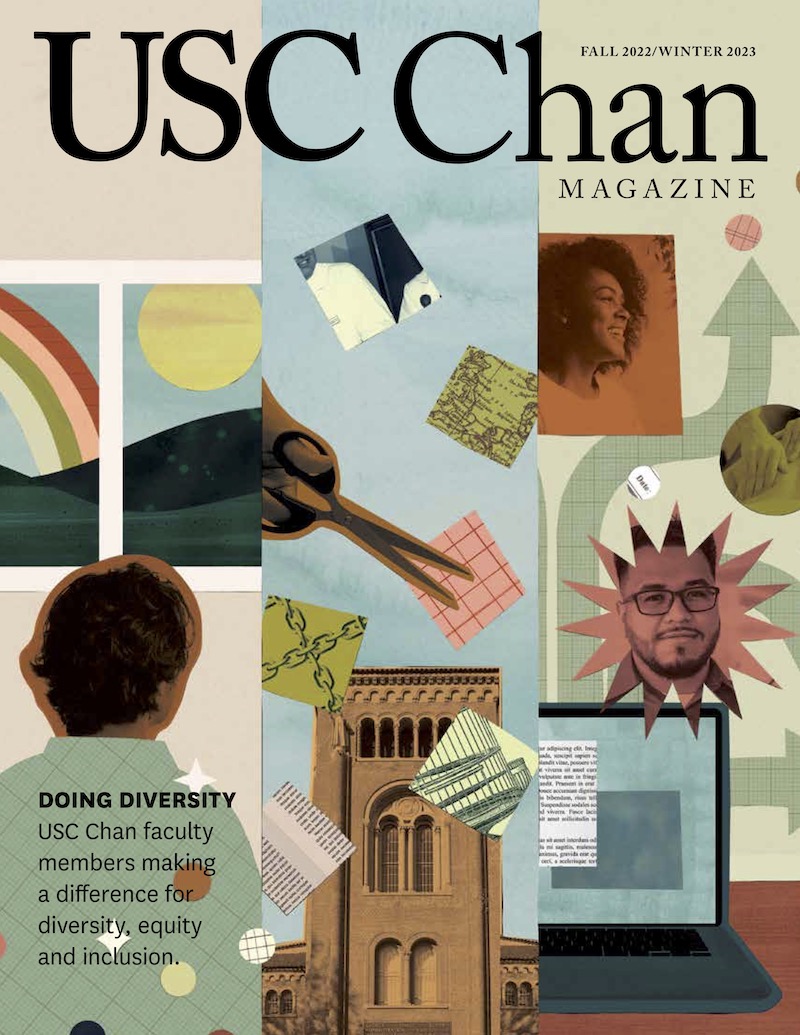
View/download the Fall 2022 / Winter 2023 issue (2.2MB)
 |
Who to contact |
 |
Find Us |
 |
+1 (323) 442-2850 +1 (866) 385-4250 (toll-free in the US) |
|
Find Us |
|
+1 (323) 442-3340 +1 (323) 442-3351 (fax) |


 Request program information
Careers at USC Chan
Read our Privacy Policy
Notice of Non-Discrimination
 Subscribe | RSS
Chan News
Chan Student Blog
Chan Admissions Blog
Careers at Chan
External OS/OT Jobs
The USC entry-level master’s degree program (cost of attendance) is fully accredited by the Accreditation Council for Occupational Therapy Education® (ACOTE). The USC entry-level OTD degree program (cost of attendance) has been granted Candidacy Status by ACOTE. View our program’s ACOTE standards public data. ACOTE c/o Accreditation Department, American Occupational Therapy Association, Inc.®, 6116 Executive Boulevard, Suite 200, North Bethesda, MD 20852-4929, (301) 652-6611 x2914, acoteonline.org
Professional program graduates are eligible to apply for certification by National Board for Certification in Occupational Therapy, Inc.® (NBCOT), nbcot.org. Program results from the NBCOT can be found online at www.nbcot.org/Educators-Folder/SchoolPerformance.